
⏩ 분석 실험실 (Analytical Laboratory)
분석 실험실(Analytical Laboratory)은 다양한 화학적, 물리적, 생물학적 성분을 정밀하게 분석하고, 물질의 구성, 구조, 특성, 농도 등을 측정하는 실험실.
An Analytical Laboratory is a laboratory that precisely analyzes various chemical, physical, and biological components and measures the composition, structure, properties, and concentration of substances.
환경, 식품, 의약품, 산업 재료 등 여러 분야에서 물질의 정확한 분석을 필요로 하기 때문에, 분석 실험실은 품질 관리, 연구 개발, 안전성 검토에 매우 중요한 역할을 함.
Since accurate analysis of materials is required in various fields such as environment, food, pharmaceuticals, and industrial materials, an Analytical Laboratory plays a crucial role in quality control, research and development, and safety assessment.
분석 실험실의 주요 목적과 역할 (Purpose and Role of an Analytical Laboratory)
분석 실험실은 물질의 세부 성분과 특성을 밝혀내기 위해 다양한 실험 기법과 장비를 사용 함.
An analytical laboratory utilizes various experimental techniques and instruments to identify the detailed composition and characteristics of substances.
정성 분석: 시료에 포함된 특정 화학 성분이나 화합물을 확인하여 물질의 성질을 파악.
Qualitative Analysis: Identifying specific chemical components or compounds present in a sample to determine the nature of the substance.
정량 분석: 특정 성분이 시료 내에 얼마나 포함되어 있는지 농도를 측정하여 정확한 함량을 확인.
Quantitative Analysis: Measuring the concentration of specific components within a sample to verify the exact content.
구조 분석: 분자의 구조와 배열을 분석하여, 물질의 화학적, 물리적 특성을 해석.
Structural Analysis: Analyzing the molecular structure and arrangement to interpret the chemical and physical properties of a substance.
순도 및 품질 평가: 의약품, 식품, 화학물질 등의 순도와 품질을 평가하고, 유해 물질의 존재 여부를 검토.
Purity and Quality Assessment: Evaluating the purity and quality of pharmaceuticals, food, and chemicals, while also checking for the presence of harmful substances.
환경 및 안전성 검사: 환경 오염 물질과 독성 물질의 농도를 측정하여, 환경 안전과 인체 건강을 평가.
Environmental and Safety Testing: Measuring the concentration of environmental pollutants and toxic substances to assess environmental safety and human health.
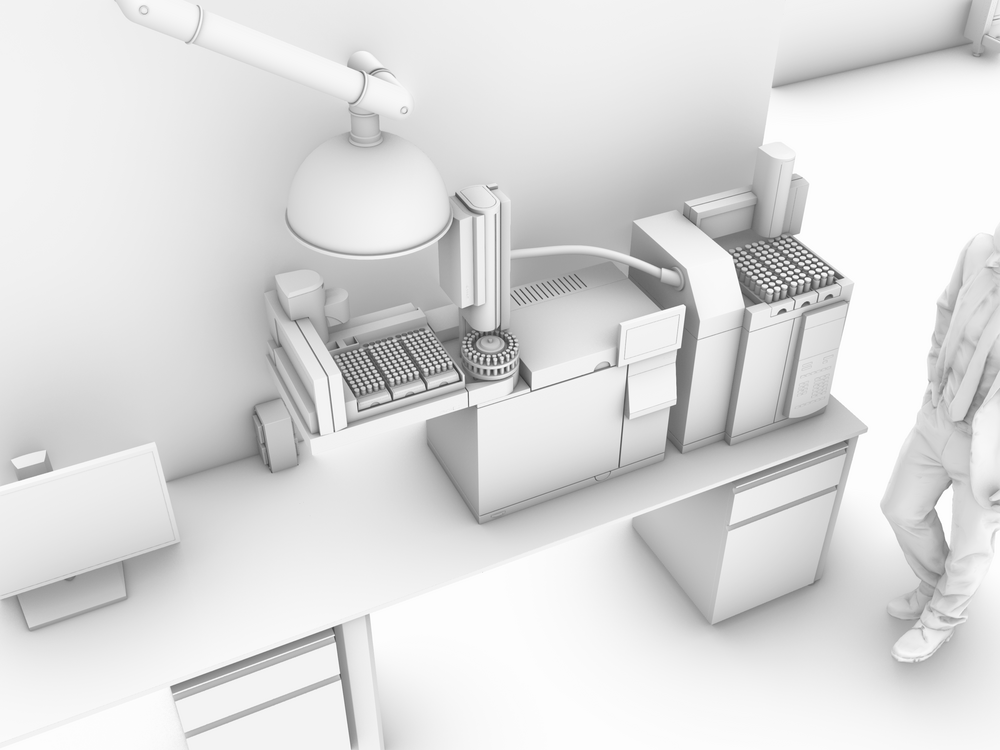
분석 실험실의 주요 장비 (Key Equipment in Analytical Laboratories)
분석 실험실에서는 다양한 물질의 특성에 맞는 고정밀 분석 장비를 갖추고 있음.
Analytical laboratories are equipped with high-precision instruments tailored to analyze various substances.
크로마토그래피 장비 (Chromatography Equipment)
가스 크로마토그래피 (GC): 휘발성 화합물을 분리 및 분석하며, 환경 오염 물질, 식품 첨가물 분석에 널리 사용.
Gas Chromatography (GC): Used to separate and analyze volatile compounds, widely applied in environmental pollutant analysis and food additive testing.
고성능 액체 크로마토그래피 (HPLC): 비휘발성 및 복잡한 화합물을 분리하여, 의약품, 화장품, 식품 성분을 분석.
High-Performance Liquid Chromatography (HPLC): Separates non-volatile and complex compounds, commonly used for pharmaceutical, cosmetic, and food component analysis.
이온 크로마토그래피 (IC): 이온 형태의 물질(예: 수질 내 양이온, 음이온)을 분석하며, 수질, 식품, 환경 분석에 사용.
Ion Chromatography (IC): Analyzes ionic substances (e.g., cations and anions in water quality) and is applied in water quality, food, and environmental analysis.
분광 분석 장비 (Spectroscopic Analysis Equipment)
UV-Vis 분광광도계: 자외선 및 가시광선을 흡수하는 성질을 이용해 물질의 농도 및 특성을 분석.
UV-Vis Spectrophotometer: Analyzes the concentration and characteristics of substances by utilizing their absorption properties in the ultraviolet and visible light spectrum.
FTIR (푸리에 변환 적외선 분광기): 적외선 흡수 스펙트럼을 통해 분자의 결합 구조와 기능성 그룹을 확인.
FTIR (Fourier Transform Infrared Spectrometer): Identifies molecular bonding structures and functional groups by analyzing infrared absorption spectra.
ICP-OES (유도 결합 플라즈마 방출 분광기): 중금속 등 다양한 원소의 농도를 측정하여 환경 오염, 토양 분석 등에 사용.
ICP-OES (Inductively Coupled Plasma Optical Emission Spectrometer): Measures the concentration of various elements, including heavy metals, and is used in environmental pollution assessment and soil analysis.
질량 분석 장비 (Mass Spectrometry Equipment)
GC-MS (가스 크로마토그래피-질량 분석기): 휘발성 물질을 분리하고, 질량 분석을 통해 화합물의 구조와 특성을 분석.
GC-MS (Gas Chromatography-Mass Spectrometry): Separates volatile compounds and analyzes their structure and characteristics through mass spectrometry.
LC-MS (액체 크로마토그래피-질량 분석기): 비휘발성 물질과 고분자 화합물의 정밀한 구조 분석에 사용되며, 의약품, 단백질 분석에 활용.
LC-MS (Liquid Chromatography-Mass Spectrometry): Used for precise structural analysis of non-volatile compounds and macromolecules, widely applied in pharmaceuticals and protein analysis.
ICP-MS (유도 결합 플라즈마 질량 분석기): 미량 원소 분석에 특화된 장비로, 수질, 토양, 식품 내 중금속 오염을 검출.
ICP-MS (Inductively Coupled Plasma-Mass Spectrometry): Specialized for trace element analysis, detecting heavy metal contamination in water, soil, and food samples.
기타 분석 장비 (Other Analytical Instruments)
NMR (핵자기 공명 분광기): 분자 구조를 원자 수준에서 해석하여, 유기 화합물과 생체 분자의 입체 구조를 파악.
NMR (Nuclear Magnetic Resonance Spectrometer): Analyzes molecular structures at the atomic level to determine the stereochemistry of organic compounds and biomolecules.
전기영동 장치: DNA, RNA, 단백질 등의 생체 분자를 크기별로 분리하여 유전적 특성 및 단백질 구성을 분석.
Electrophoresis Equipment: Separates biomolecules such as DNA, RNA, and proteins based on size, enabling analysis of genetic characteristics and protein composition.
열 분석기 (DSC, TGA): 물질의 열적 성질을 분석하여, 고분자 물질의 열 안정성, 분해 온도 등을 측정.
Thermal Analyzers (DSC, TGA): Examine the thermal properties of materials, measuring thermal stability, decomposition temperature, and other characteristics of polymer materials.
분석 실험실의 안전 관리 (Safety Management in an Analytical Laboratory)
분석 실험실은 고농도의 화학물질, 유해성 물질을 다루기 때문에 철저한 안전 관리가 필요.
An analytical laboratory requires strict safety management as it handles high concentrations of chemicals and hazardous substances.
기본 안전 수칙 (Basic Safety Guidelines)
보호 장비 착용: 실험복, 장갑, 안전 안경 등을 착용하여 화학물질과의 직접 접촉을 피함.
Wearing Protective Equipment: Wear lab coats, gloves, and safety goggles to prevent direct contact with chemicals.
환기 시스템 가동: 휘발성 화합물을 다룰 때는 후드(Fume Hood)에서 작업하며, 실험실 내 공기를 정화하기 위한 환기 시스템을 가동.
Operating the Ventilation System: Work in a fume hood when handling volatile compounds and ensure the ventilation system is running to maintain clean air in the laboratory.
화학물질 관리: 유해성 물질과 산화제, 인화성 물질은 별도의 보관 장소에 안전하게 저장하며, 물질 안전 보건 자료(MSDS)를 비치 함.
Chemical Management: Store hazardous substances, oxidizers, and flammable materials in designated storage areas, and keep Material Safety Data Sheets (MSDS) readily available.
폐기물 관리 (Waste Management)
화학 폐기물 분리: 화학 폐기물은 산성, 염기성, 유기용매 등으로 구분하여 적절히 처리하고, 폐기물 처리 규정을 준수 함.
Chemical Waste Segregation: Chemical waste shall be properly classified and disposed of according to its type, such as acidic, alkaline, and organic solvents, in compliance with waste disposal regulations.
독성 물질 처리: 독성 물질이나 중금속은 특별한 절차에 따라 폐기하며, 오염 방지를 위해 밀폐 용기에 보관 후 폐기.
Toxic Substance Disposal: Toxic substances and heavy metals shall be disposed of following special procedures, stored in sealed containers before disposal to prevent contamination.
분석 실험실의 주요 연구 및 실험 사례 (Key Research and Experimental Cases in the Analytical Laboratory)
분석 실험실에서는 정밀하고 신뢰성 높은 결과를 얻기 위해 다양한 실험을 수행.
주요 연구 및 실험 사례는 다음과 같음.
The analytical laboratory conducts various experiments to obtain precise and reliable results. The key research and experimental cases are as follows
환경 오염 분석: 대기, 수질, 토양 시료를 분석하여 중금속, 유기 오염 물질, 미세먼지 등의 농도를 측정하고, 환경 오염 상태를 평가.
Environmental Pollution Analysis: Analyzing air, water, and soil samples to measure the concentration of heavy metals, organic pollutants, and fine dust, and assessing environmental pollution levels.
식품 안전성 검사: 식품 내 유해 물질(중금속, 농약 잔류물, 방부제 등)을 분석하여 안전성을 평가하며, 품질 관리에 사용 됨.
Food Safety Testing: Analyzing harmful substances (heavy metals, pesticide residues, preservatives, etc.) in food to evaluate safety and ensure quality control.
의약품 성분 분석: 의약품에 포함된 활성 성분, 불순물, 용매 잔류물을 정밀 분석하여 의약품의 품질과 안전성을 검증.
Pharmaceutical Component Analysis: Precisely analyzing active ingredients, impurities, and residual solvents in pharmaceuticals to verify their quality and safety.
고분자 재료 분석: 플라스틱, 고무 등 고분자 물질의 열 안정성, 기계적 특성, 구성 성분을 분석하여 재료의 품질을 평가.
Polymer Material Analysis: Examining the thermal stability, mechanical properties, and composition of polymer materials such as plastics and rubber to assess material quality.
법과학 분석: 법적 증거물을 분석하여 사건과 관련된 물질을 확인하고, 법적 증거로 활용할 수 있도록 정밀한 결과를 제공.
Forensic Analysis: Analyzing legal evidence to identify substances related to cases and providing precise results that can be used as legal evidence.
분석 실험실의 분류 (Classification of Analytical Laboratories)
분석 실험실은 연구 대상과 분석 목적에 따라 여러 종류로 나뉨.
Analytical laboratories are classified into various types depending on the research subject and analytical purpose.
환경 분석 실험실: 대기, 수질, 토양에서 오염 물질의 농도를 측정하고, 환경 보호와 안전성을 평가.
Environmental Analysis Laboratory: Measures the concentration of pollutants in air, water, and soil to assess environmental protection and safety.
식품 분석 실험실: 식품의 성분, 영양소, 유해 물질을 분석하여 식품 안전성과 품질을 확인.
Food Analysis Laboratory: Analyzes the components, nutrients, and harmful substances in food to ensure food safety and quality.
제약 분석 실험실: 의약품의 성분, 순도, 불순물을 분석하여 안전성과 효능을 검토하고 품질을 관리 함.
Pharmaceutical Analysis Laboratory: Examines the composition, purity, and impurities of pharmaceuticals to assess their safety, efficacy, and quality control.
재료 분석 실험실: 금속, 고분자, 복합재료의 물리적, 화학적 성질을 분석하여 신뢰성과 내구성을 평가 함.
Materials Analysis Laboratory: Analyzes the physical and chemical properties of metals, polymers, and composite materials to evaluate their reliability and durability.
법과학 분석 실험실: 사건과 관련된 증거물을 과학적으로 분석하여 법적 증거로 사용할 수 있는 데이터를 제공.
Forensic Analysis Laboratory: Scientifically analyzes evidence related to incidents to provide data that can be used as legal evidence.
분석 실험실에서 유의할 점 (Precautions in an Analytical Laboratory)
분석 실험실에서는 정밀한 실험과 고도의 신뢰성이 요구되기 때문에 몇 가지 유의 사항이 있음.
In an analytical laboratory, precise experiments and high reliability are required. Therefore, several precautions must be observed.
장비 유지 및 교정: 분석 장비의 정기적인 유지 보수와 교정을 통해 정확한 측정값을 확보 함.
Equipment Maintenance and Calibration: Regular maintenance and calibration of analytical instruments are essential to ensure accurate measurements.
실험 프로토콜 준수: 모든 실험은 표준 절차에 따라 진행하며, 표준 작업 절차(SOP)를 준수하여 실험의 일관성을 유지.
Adherence to Experimental Protocols: All experiments must follow standardized procedures, and adherence to Standard Operating Procedures (SOPs) ensures consistency in experiments.
데이터 관리 및 보고: 분석 결과는 데이터베이스에 체계적으로 저장하고, 데이터의 무결성과 재현성을 확보하기 위해 정확하게 기록.
Data Management and Reporting: Analytical results should be systematically stored in a database, and data integrity and reproducibility must be ensured through accurate record-keeping.
표준 물질 사용: 분석의 정확도를 높이기 위해 표준 물질(reference material)을 사용하여 검증과 교정을 수행.
Use of Reference Materials: To enhance analytical accuracy, reference materials should be used for validation and calibration.
분석 실험실은 정밀한 측정과 신뢰성 있는 결과 도출이 필수적이며, 다양한 장비와 분석 기법을 통해 각 분야의 품질과 안전성을 확보하는 중요한 역할을 수행.
The analytical laboratory requires precise measurements and reliable results, playing a crucial role in ensuring quality and safety across various fields through diverse equipment and analytical techniques.
데이터의 신뢰성을 높이기 위해 실험 절차를 정확히 준수하고, 철저한 안전 관리를 시행하는 것이 중요.
To enhance data reliability, it is essential to strictly adhere to experimental procedures and implement thorough safety management.
분석 실험실 (Analytical Laboratory) – 상세 구성
목적 - 시료의 정성 분석(Qualitative Analysis), 정량 분석(Quantitative Analysis), 오염물질 측정, 불순물 분석 등 고정밀 분석을 수행하여 성분, 농도, 순도, 화학적 특성 등을 파악함.
분석 장비들은 고가이고 민감하며, 정확성과 재현성을 위해 환경 관리와 공간 분리가 매우 중요함.
분석실 (Main Instrument Room)
역할: 주 분석 장비(HPLC, GC, ICP-MS, UV-Vis, FTIR, AAS 등)를 설치하여 실제 측정을 수행하는 핵심 공간
주요 고려사항
장비별 전용 전기/배기/바닥하중 고려
유해가스 발생 장비(GC-MS 등)는 개별 배기 필수실내 온습도 ±2% 이내 유지 필요
내진 설계(진동 민감 기기: ICP-MS, LC-MS) 고려
설치 장비: GC, HPLC, GC-MS, FTIR, UV-Vis, ICP-MS, AAS, TOC 등
시료 전처리실 (Sample Preparation Room)
역할: 분석 전 희석, 여과, 추출, 정제, 농축, 균질화 등 물리적·화학적 전처리 수행
필수 요소
워크벤치, 흄후드, 초음파 세척기, 질소농축기
냉장/냉동 시료 전처리기기
정밀 저울과 밀폐형 밸런스룸(또는 방진대)
표준물질 보관실 (Standard Material Storage Room)
역할: 기준시약, 레퍼런스 스탠다드, 인증표준물질(CRM) 등을 구분 보관
특징
정온/정습 조건 (20~25°C, RH < 50%)
출입 통제 및 재고 관리 (LIMS 연동 시 용이)
일부 고위험 표준물질은 내화보관함에 보관
장비 보정실 (Calibration / QA Room)
역할: 분석 장비의 검교정(Calibration), 표준곡선 작성, 정확도 확인
특징
정전기 방지, 정밀 저울 및 중량측정기 설치
기기 자체 교정용 부속장비 보관교정 전용 로그시트 또는 전산화된 관리 시스템 운영
진동방지실 (Vibration-Isolated Room)
역할: 진동에 민감한 분석장비 설치
설계 포인트
방진대(Vibration Damping Table), 이중 바닥 또는 진동 절연 구조
기초 슬래브 분리설계(층간 공진 방지)
전자기 차폐 및 차광 필요 시 별도 처리
냄새 및 가스처리실 (Solvent & Fume Handling Room) 🔍 [추가 구성 추천]
역할: 유기용매 희석, 시약 조제, Solvent Mixing 작업
설치 장비
배기 흄후드(Fume Hood)
Solvent 전용 Storage Cabinet
방폭 설비 및 환기시설 필수
시약 보관실 (Chemical Storage Room)
역할: 분석용 시약(산, 염기, 유기용매 등) 보관
구성
위험물 분리 보관대 (산/염기/산화제/가연성 분리)
방폭등, 방화도어, 환기시설
화학물질관리법에 따른 MSDS 비치, 라벨링 등
폐기물 임시 보관실 (Waste Storage Room)
역할: 분석 후 발생한 폐시료, 폐용매 등 임시 적치
설비 요건
방화 구조 및 누출 감지 시스템
내산·내화학성 용기 비치
위험물 라벨링 및 관리대장 운영
저온 보관실 / 냉장 샘플보관실 (Cold Room / Refrigerated Sample Room)
역할: 민감한 시료, 생체시료, 표준물질의 장기 저장
온도 범위
일반 냉장: 4°C저온냉동: -20°C ~ -80°C (Freezer 구역 분리 권장)
자료 분석실 / 결과처리실 (Data Analysis Room)
역할: 분석 결과 정리, 보고서 작성, 데이터 백업 공간
특징
LIMS (Laboratory Information Management System)
전산 보안 장비 (백업 서버, 이중 저장장치)
분석자 업무용 데스크, 모니터링 장치
기기 유지보수실 / 수리실 (Instrument Maintenance Room)
역할: 장비 부속품 교체, 예비 부품 관리 및 긴급수리
구성
장비 메뉴얼, 툴박스, 압착기, 펌프 예비 부품
일부 전기공사 및 기계작업 가능 공간 포함
정리
분석실 주요 분석장비 설치 및 운용
시료 전처리실 분석 전 희석, 추출, 농축 등 수행
표준물질 보관실 인증표준물질 및 기준시약 보관
장비 보정실 교정, 표준곡선 작성 등 정밀보정
진동방지실 진동에 민감한 기기 설치 (예: LC-MS, FTIR)
냄새/가스처리실 유기용매 조제 및 증발, 독성가스 배기
시약보관실 위험물별 분리 저장
폐기물 보관실 폐시료, 폐용매의 임시 보관
저온 샘플보관실 민감 시료/생체시료 보관 (-20°C, -80°C 포함)
자료 분석실 결과 보고서 작성, LIMS 데이터 처리
기기 유지보수실 장비 수리, 예비 부품 관리 공간